Walking & Weather · 8 min read
What to Wear for an Evening Walk as the Weather Gets Cooler
The air can feel pleasant when you leave home and surprisingly cool half an hour later. Or the opposite happens: you dress for the first breeze, begin walking and soon wish you had left one layer behind. Cooler-weather walking is less about finding one perfect outfit and more about giving yourself room to adjust.
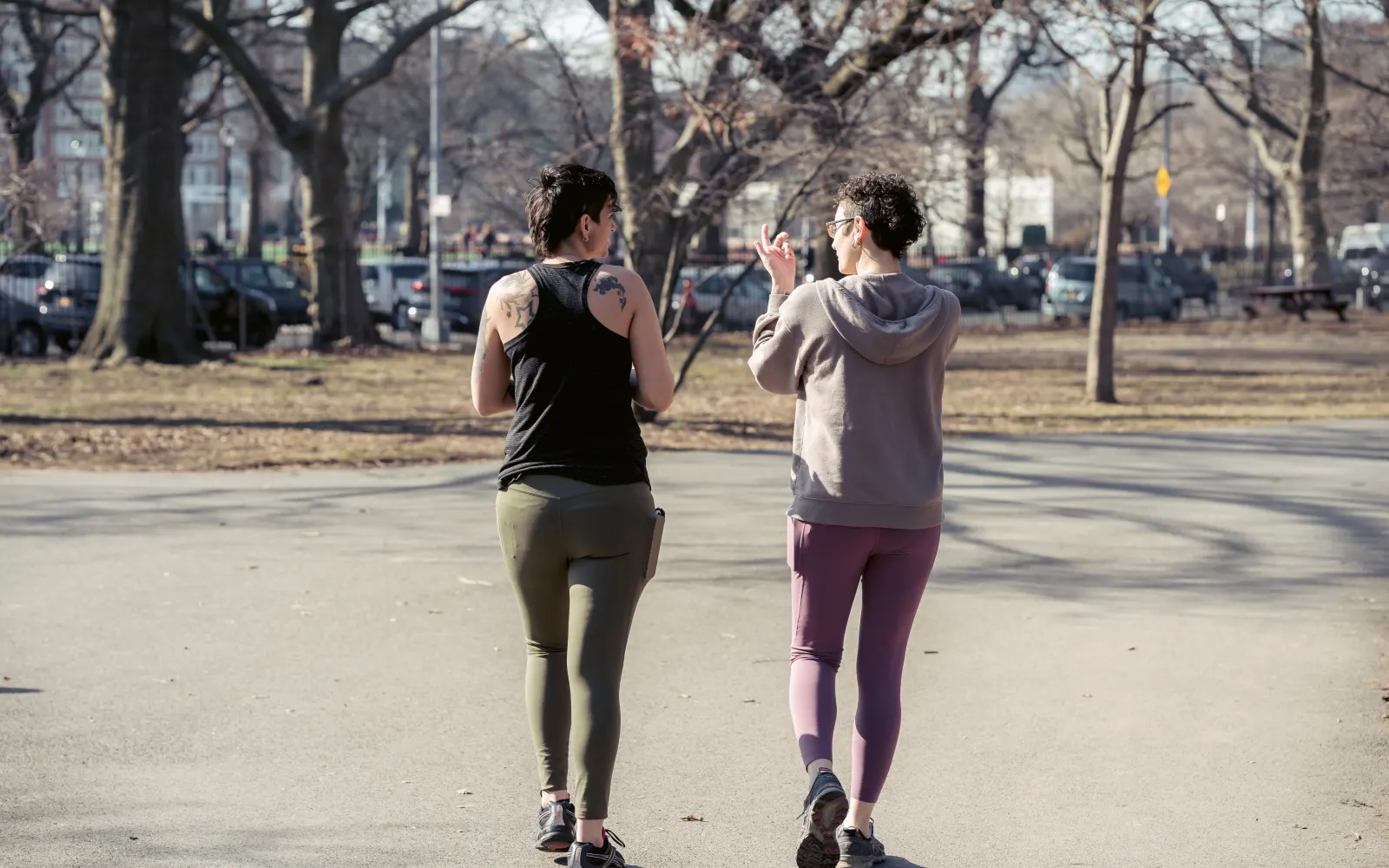
Dress for the whole walk, not the first minute
An evening walk often begins while the day is still holding some warmth. The temperature may fall after sunset, and an exposed road can feel different from a sheltered street or park. Check the conditions for your location and think about how long you will be outside before choosing what to wear.
You should feel comfortable at the start, not sealed inside every warm item you own. Walking produces heat, so a slightly cool first few minutes can become comfortable once you settle into your pace. Personal comfort varies, however. If you tend to feel cold, are walking gently or expect to stop along the way, carry the extra layer rather than relying on one heavy piece.
Start with a base that moves easily
The layer next to your skin should let your arms swing and your torso turn without pulling. A comfortable T-shirt or active top is enough on many mild evenings. Choose a fit that stays in place without restricting your shoulders, and avoid seams or trims that begin to irritate once the walk becomes longer.
Warmth is not decided by fibre name alone. Fabric construction, thickness, fit and the air held around the body all influence how clothing feels. For a closer look at that relationship, read Why Some Clothes Feel Hotter Than Others from MP Apparels & Garments.
Add one removable layer
A light midlayer is often more useful than a bulky jacket because it can be opened, tied around the waist or carried when you warm up. A full zip gives you more control than a closed pullover. If the air is breezy, a lightweight outer layer may be more practical than adding thickness underneath.
Test the complete combination before leaving. Raise your arms, turn your shoulders and take a long stride. Layers that fit well separately can still bunch or tighten when worn together. Performance Heritage’s broader Pakistan layering guide explains how base, mid and outer layers can work across changing conditions; for a walk, the simplest version is usually the best one.
Choose trousers that keep your stride natural
Walking trousers should remain comfortable through the waist, hips, thighs and knees. Take a few long steps and sit down before heading out. If the waistband slips, the knees pull or the fabric gathers around your shoes, the problem is likely to become more distracting with distance.
Cooler weather does not automatically require heavy trousers. Begin with the temperature, wind and length of the walk, then consider your own preference. A streamlined active trouser can provide coverage without excess fabric, while a relaxed jogger may suit a gentler route. What matters is secure comfort and an unrestricted stride.
Let the route decide your footwear
A smooth pavement, an uneven park path and a steep neighbourhood road place different demands on footwear. Choose walking shoes with a fit, support and grip appropriate to your feet, surface and conditions. Wear socks that sit smoothly and do not slide or bunch as you move.
Darkness can hide broken ground, wet leaves and changes in the path. Slow down when visibility is poor and avoid treating an unfamiliar route like a familiar daytime walk. Practical footwear helps, but attention to the surface still matters.
Visibility becomes part of the outfit
After sunset, being comfortable is only half the job. Choose well-lit routes where possible. Light-coloured or reflective details can make you easier for other road users to notice, particularly when a pavement is missing or you need to cross traffic.
A phone torch is useful for seeing a dark patch but should not replace awareness of what is around you. Keep headphone volume low enough to hear traffic and other people. If a route feels isolated or unsafe, change it, walk with someone or move the walk to an earlier time.
Carry less, but carry what matters
You do not need to pack for an expedition. For a familiar neighbourhood walk, a charged phone, any necessary identification and a small amount of water may be enough. Longer or more remote routes require more planning, and people managing a health condition may need personal medication or advice specific to them.
Use a secure pocket or a small bag that does not bounce against you. Keys, loose cords and a phone moving in a trouser pocket can turn into constant distractions. The aim is to leave your hands and stride free.
Avoid the two common layering mistakes
The first mistake is dressing for the coldest moment and overheating for most of the walk. The second is leaving with no adjustable layer and becoming uncomfortable when the temperature changes. One breathable base and one removable layer solve many mild-weather situations.
If clothes become damp, the return journey may feel cooler once your pace drops. Change out of wet clothing when you get home and follow each garment’s care label. On very cold, wet or windy days, rethink the time, route or duration rather than expecting clothing to remove every risk.
Build a repeatable evening-walk outfit
A dependable combination might be a comfortable top, active trousers, suitable walking shoes and a light layer you can remove. Add visibility for lower-light routes. Once that basic outfit works, small changes can handle a warmer evening, a cooler finish or a longer walk.
That is the useful side of activewear: it makes ordinary movement easier to begin. Performance Heritage is built around clothing that can move between training, travel and the rest of the day. An evening walk does not need a complicated kit. It needs an outfit that lets you step outside, adjust when the weather changes and keep your attention on the walk.
Frequently asked questions
- Should I wear a jacket for an evening walk?
- It depends on the temperature, wind, chance of rain, walking pace and how long you will be outside. In mild conditions, a light removable layer may be more adaptable than a heavy jacket.
- What should I wear when it is cool but not cold?
- A comfortable active top, unrestricted trousers, suitable walking shoes and one light layer are a practical starting point. Adjust for your route, pace and personal comfort.
- How can I stay visible while walking after sunset?
- Prefer well-lit routes and use light-coloured or reflective details where practical. Stay alert around traffic, keep headphone volume low and carry a charged phone.